
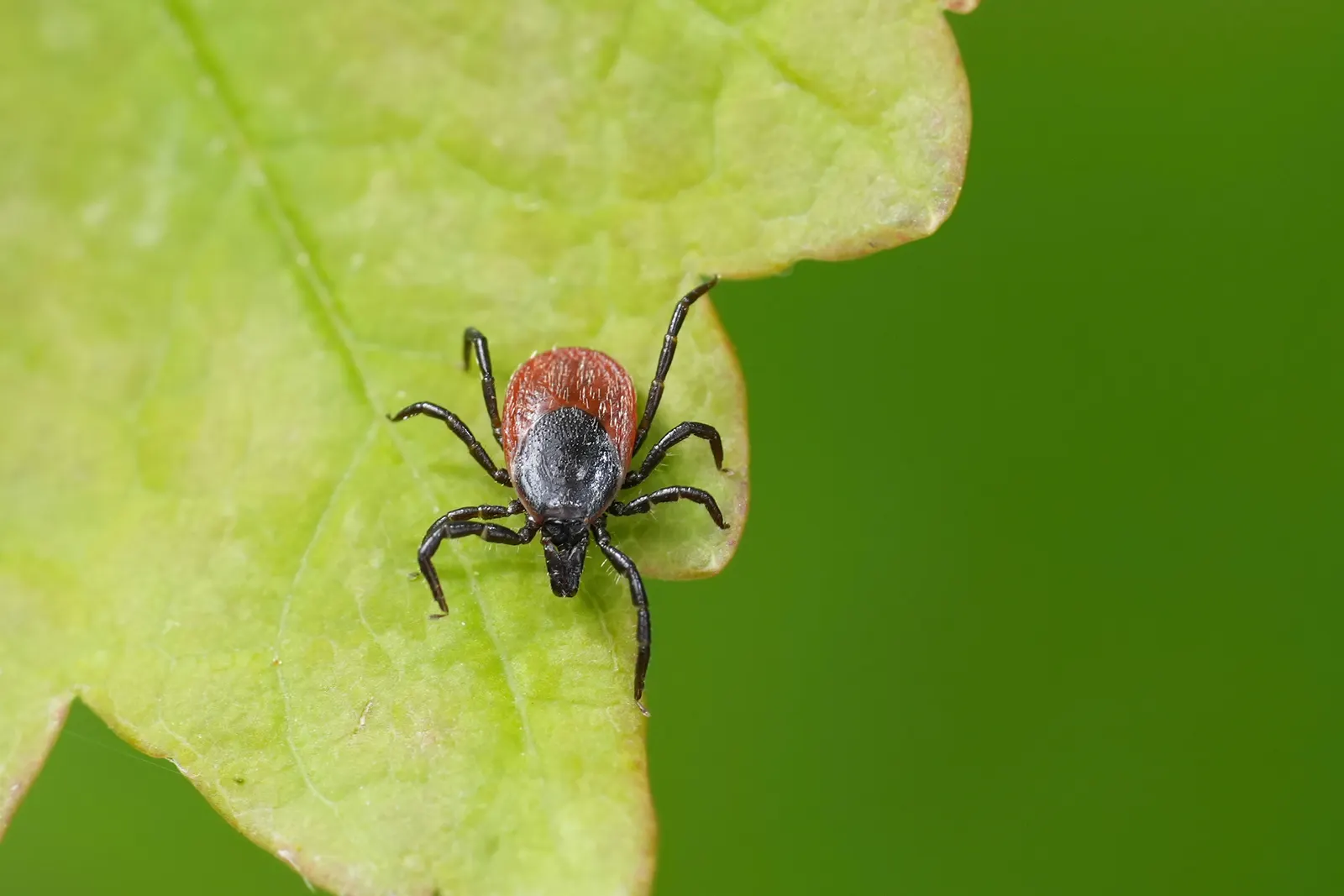
Ticks have quietly become one of the most consequential pests a homeowner manages: reported tick-borne disease cases in the U.S. have multiplied over two decades — Lyme disease, ehrlichiosis, Rocky Mountain spotted fever, alpha-gal syndrome (the tick-induced red meat allergy) — and the exposure that matters most isn’t the deep woods. It’s the edge of your own backyard. The encouraging flip side: tick exposure is unusually controllable, because ticks are prisoners of habitat, and you own the habitat.
How ticks actually hunt
Ticks can’t jump, fly, or drop from trees — all three are myths. They quest: climbing to the tip of a grass blade or brush stem, forelegs outstretched, waiting for something warm to brush past. Questing costs them moisture, so ticks are strictly bound to humid microhabitats — shaded tall grass, brush, leaf litter, groundcover like ivy and pachysandra. A sunny, mowed lawn is a desert that kills them in hours.
That single fact is the entire logic of tick control: your lawn’s shaded, overgrown margins are the tick zone; the open middle is nearly tick-free. Researchers consistently find the overwhelming majority of residential ticks within a few yards of the woodline, fence-line brush, or groundcover beds — and almost none in maintained open turf.
The ticks worth knowing
Blacklegged (deer) ticks — small, reddish-brown-and-black — carry Lyme disease and several other pathogens; the poppy-seed-sized nymphs of late spring and summer cause most infections because they’re so easily missed. Adults quest in fall and on mild winter days. American dog ticks — larger, with mottled white markings — favor grassy, open areas and transmit Rocky Mountain spotted fever. Lone star ticks — the female wears a single white dot — are aggressive, abundant across the South and Midwest, and are the tick behind alpha-gal meat allergy. Regional cast varies, but the habitat rules are shared.
Hosts complete the system: mice and other small rodents infect larval ticks (mice are the Lyme reservoir), and deer transport and feed the adults. A yard that feeds deer and shelters mice is running a tick farm, whatever its landscaping budget.
Designing ticks out of your yard
- Mow, and mind the margins. Keep grass short; where lawn meets woods or fence-line brush, cut the transition zone hard.
- Build a border. A three-foot strip of wood chips or gravel between woods and lawn is a proven barrier — ticks desiccate crossing it. Put play sets and seating in full sun, well inside it.
- Clear the litter. Rake and remove leaf litter (tick overwintering habitat), thin dense groundcovers near activity areas, and keep stone walls and woodpiles — mouse hotels — tidy and away from the patio.
- Manage hosts. Deer-resistant plantings or fencing where deer pressure is high; rodent harborage reduction everywhere (see our rodent guide).
- Targeted treatment. Because ticks concentrate in that narrow perimeter habitat, professional acaricide applications to the margins — not blanket lawn spraying — knock down tick numbers dramatically. It’s precision work: a little product in exactly the right strip. Yard tick treatment is part of our home protection service.
Protecting bodies and pets
Dress the part in tick habitat (long pants tucked into socks — unfashionable, effective), use EPA-registered repellents (DEET or picaridin on skin; permethrin-treated clothing and shoes are outstanding for people frequently in tick country), and run a same-day full-body tick check on people, kids, and dogs after outdoor time — scalp, behind ears, waistband, behind knees, groin. Showering within a couple of hours washes off unattached ticks and doubles as the check. A 20-minute high-heat dryer cycle kills ticks on field clothes; a wash alone does not.
Pets need their own layer: veterinary tick preventives year-round, since dogs both suffer tick disease and ferry unattached ticks into beds and couches.
When to get help
If you’re finding ticks on family or pets repeatedly, if your property backs to woods or fields, or if you’ve had a tick-borne illness scare, a habitat-focused inspection plus targeted barrier treatment converts your yard from tick habitat to tick hostile — and unlike most pest problems, this one’s fix is visible from the kitchen window: a cleaner edge, a drier margin, and a summer of ankle-level peace.