
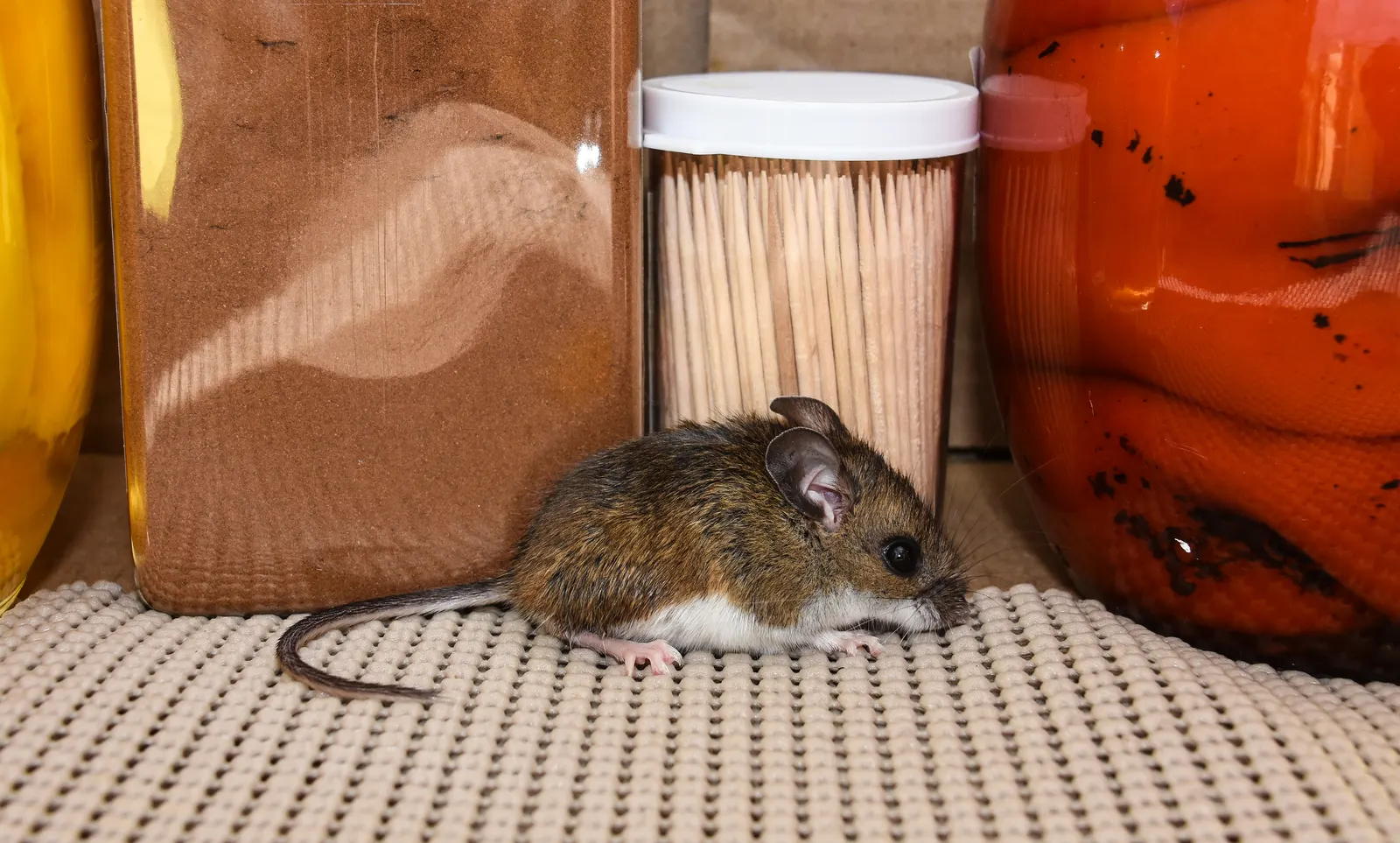
The scratching in the wall at 2 a.m., the pepper-grain droppings in the junk drawer, the flash of movement at the edge of the kitchen — house mice announce themselves clearly once you know the signature. What homeowners consistently underestimate isn’t detection; it’s what finishing the job requires. Traps catch mice. They do not fix a mouse problem, for a reason that becomes obvious once you see it: the doorway is still open.
Reading the evidence
- Droppings are the census-taker’s tool: rice-grain sized, dark, pointed at the ends, concentrated where mice travel and feed — drawers, under sinks, along walls, in the pantry. Fresh ones are dark and soft; old ones gray and crumbly. (Raisin-sized droppings mean rats — a different playbook.)
- Night sounds — scratching, scurrying, gnawing in walls and ceilings after dark. Mice are nocturnal; audible activity usually means established residents, not a passerby.
- Gnaw marks on food packaging, wooden edges, wiring insulation. Rodent incisors grow continuously; gnawing is compulsory, not optional — and gnawed wiring is the fire-risk headline of this pest.
- Rub marks and runways — greasy smudges along baseboards where oily fur repeats a route; in dusty areas, visible paths and tail drag lines.
- Nests — shredded paper, insulation, and fabric balled into a soft mass in a drawer, wall void, appliance underside, or garage box, usually within 25 feet of food. That 25-foot radius is a useful mental map: mice live close to their pantry.
Why mice get in — and how easily
A house mouse fits through a gap the diameter of a dime. Every home has candidates: the corner gaps of garage doors, the opening where the AC lineset or gas pipe enters, brick weep holes, gaps under siding, the unsealed hole a cable installer drilled in 1998, foundation vents with torn screens. Come the first cold nights of fall, the field population moves toward warmth, and those gaps become doors.
Once in, mice find a five-star habitat: temperature-controlled, predator-free, with crumbs. A female can produce a litter of five or six every month or so in good conditions. The math is why “we catch one occasionally” quietly becomes an infestation.
Why traps alone lose
Trapping removes individuals from a population that is being replenished through open entries. This is the trap-and-hope cycle: catch three, quiet for two weeks, scratching returns, repeat all winter. Meanwhile poison baits used loose indoors add their own problems — risk to kids and pets, and poisoned mice dying in wall voids, which announces itself over the following weeks.
Our rodent control service starts by inspecting for activity and likely entry routes, then treating the rodents present and explaining prevention steps. Closing structural gaps is a separate repair step for homeowners to arrange outside Dallas and Fort Worth. Our Dallas and Fort Worth teams can include exclusion work in a local rodent plan.
What you can do this week
- Seal the obvious: steel wool + sealant in pipe penetrations, a garage-door bottom seal, sweeps on exterior doors. You may not get everything, but every closed gap narrows the search.
- Cut the food supply: pantry goods and pet food in rigid sealed containers; no pet bowls left full overnight; bird seed in metal cans (bird feeders are a major unnoticed subsidy).
- Clear the runway: vegetation and stored items pulled back from the foundation; firewood off the ground and away from the house; declutter garage floors so evidence is visible.
- Trap smart while you wait: snap traps perpendicular to walls, trigger side against the baseboard, baited with peanut butter — placement along runways beats quantity.
When to call
Call when sounds are in walls or ceilings (nesting may be established), when droppings keep appearing after a week of serious trapping, or when you smell ammonia. An inspection can identify activity and likely entry routes so you can plan treatment and any needed home repairs.