
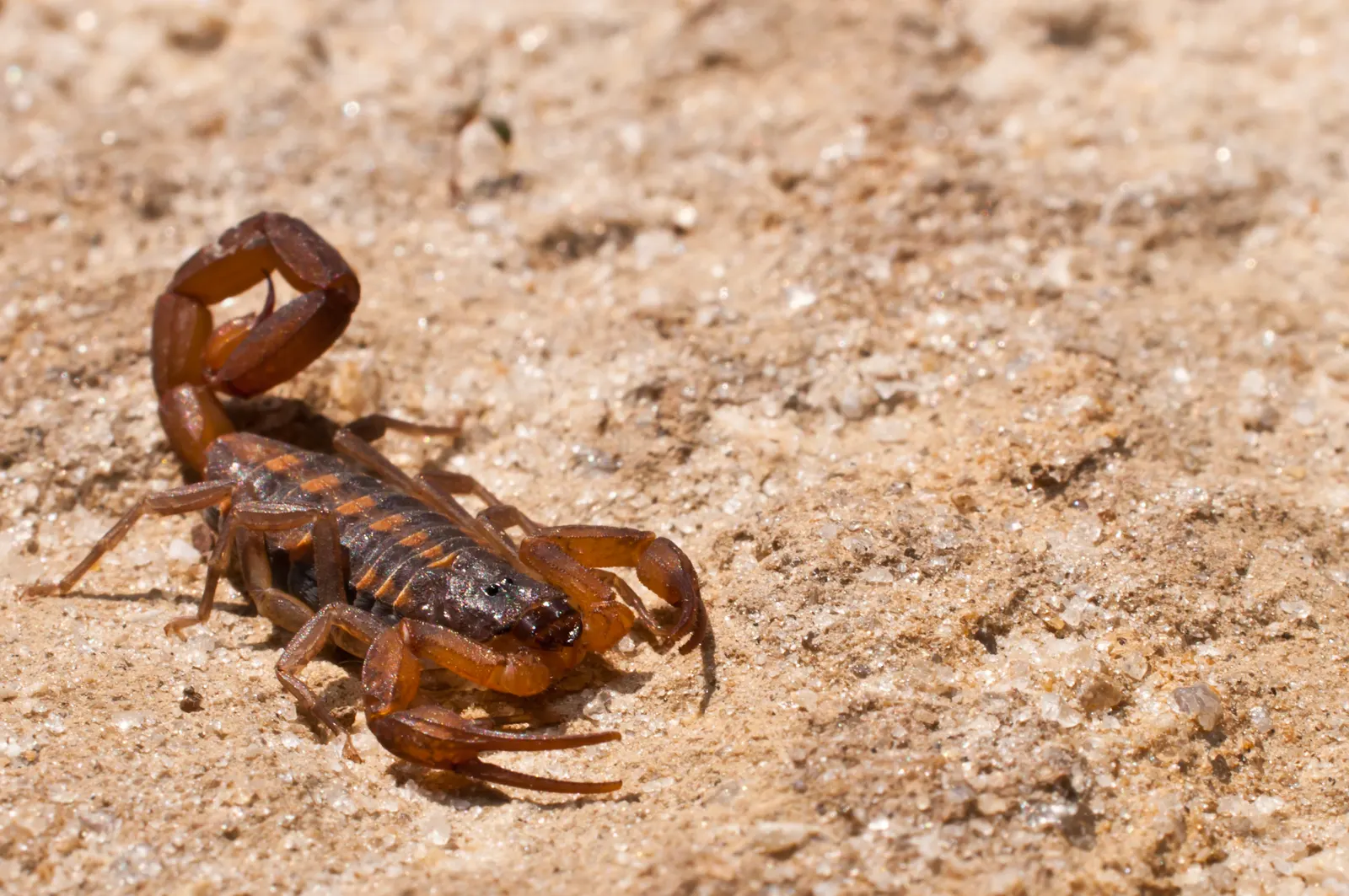
A scorpion in the house tells you two things, and the second one matters more. The first is obvious: you have a scorpion. The second is that your home is probably hosting the insect population it came to hunt — scorpions are predators, and they don’t linger where there’s nothing to eat. Treat the sighting as a symptom and you’ll solve it; chase the individual scorpion with a shoe and you’ll be doing it again next month.
Identification
The scorpion homeowners meet across Tennessee, Texas, Arkansas, and the mid-South is overwhelmingly the striped bark scorpion — pale yellowish-tan, about two and a half inches, with two dark stripes down the back and the unmistakable silhouette: crab-like claws in front, segmented tail curved up and over the body, stinger at the tip. They’re night hunters with poor eyesight and remarkable endurance — a scorpion can slow its metabolism and go months without food, but it cannot go long without water, which is exactly why your plumbing matters to it.
Two habits are worth knowing. They climb — walls, trees, and the underside of things, which is how they end up in attics and on ceilings. And they glow blue-green under UV light, which is why professionals inspect with a blacklight and why a $10 UV flashlight is the fastest way to confirm what you’re dealing with.
Why you have them
Scorpions go where the hunting is good and the moisture is reliable. Yards with heavy insect activity — gardens, mulch beds, wood piles, compost, exterior lighting that draws prey — are fertile ground. Leaky spigots, AC condensation lines, and poor drainage supply the water. When summer heat turns extreme or the soil dries out, they move toward the most temperature-stable, moisture-reliable structure available: the house.
Indoors, they follow the same logic — dark, undisturbed, damp. Under-sink cabinets, basements, crawl spaces, laundry areas, closets, stored fabric, and footwear.
What actually works
Squashing the one you see does nothing about the ones you don’t, and scorpions’ sheltered habits make them poor targets for general spraying alone. Control that lasts works down the food chain:
- Reduce the prey. A structure with fewer crickets, roaches, and other insects supports fewer predators. This is why scorpion control is fundamentally general pest control done well.
- Cut the harborage. Firewood off the ground and away from the house, mulch pulled back from the foundation, rock and debris piles relocated, tree bark and limbs trimmed off the roofline (they climb in from above).
- Seal the routes. Door sweeps, foundation gaps, torn screens, utility penetrations, weep holes — a striped bark scorpion needs surprisingly little.
- Fix the water. Dripping spigots and condensation lines are standing invitations.
- Targeted treatment. Professional products applied to harborage lines, entry points, and the prey population — with a UV inspection to find activity you can’t see in daylight.
That combination is our general pest program working as designed: inspection first, treatment at the source, and free re-services between visits if covered pests come back — the same or next day. If you’re seeing scorpions, tell us when you book; the inspection will look for the prey problem underneath.