
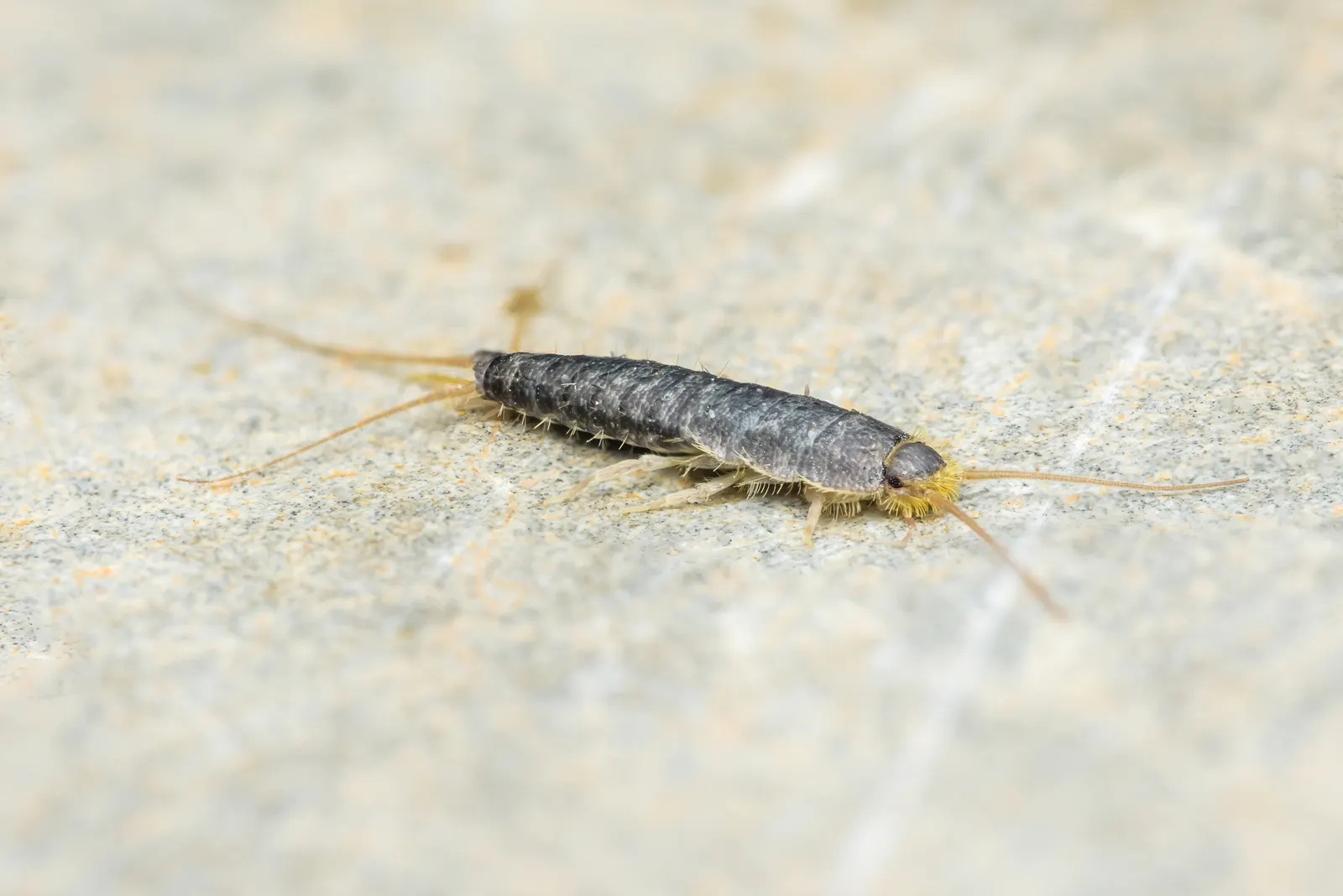
Find a silverfish in the bathtub and you’ve learned two things: you have silverfish, and — more usefully — some part of your home is running more humid than it should. Silverfish are among the least dangerous pests in this library, but they’re worth taking seriously for two reasons: they quietly damage exactly the belongings people can’t replace (books, photographs, documents, heirloom textiles), and they’re a living hygrometer whose presence often flags a moisture condition that bigger problems also love.
Identification
Silverfish are unmistakable once seen properly: teardrop-shaped, half an inch long, covered in silvery-gray metallic scales, with two long antennae in front and three tail bristles behind — and a distinctive wriggling, fish-like sprint when the lights come on. They’re wingless, nocturnal, and fast enough to escape most swats into the nearest crack.
They’re ancient — among the most primitive insects alive, essentially unchanged for hundreds of millions of years — and built for endurance: individuals live two to three years or more and can go months without eating. What they cannot tolerate is dryness. Silverfish require high humidity (roughly 75%+ to thrive), which chains them to bathrooms, basements, laundry areas, kitchens, attics under humid climates, and any wall void or closet sharing air with a moisture source. Their cousin the firebrat — mottled gray-brown, same silhouette — runs hotter, thriving near furnaces and water heaters.
What they actually eat (and ruin)
Silverfish feed on starches, sugars, and cellulose: book bindings and the paste in them, paper (they graze the surface, leaving irregular scraped patches and notched edges), wallpaper paste, photographs (the gelatin coating), cardboard, stored documents, and natural fabrics — cotton, linen, rayon, silk — especially when starched or soiled. In the pantry, they’ll work through flour, oats, and cereal if packaging allows. Damage accumulates slowly and matters most where storage sits undisturbed for years: the attic boxes of photos, the basement bookshelf, the wedding dress in a cardboard box. Yellowish surface stains, pepper-like droppings, and shed scales in drawers and boxes are the calling cards.
They also leave a subtler mark on the house itself: silverfish are a known indoor allergen source (their molted scales, like dust mites’ and roaches’ debris, accumulate in dust), and a thriving population sometimes flags the kind of chronic damp that pest professionals treat as a lead — the same conditions that welcome cockroaches, mold, and carpenter ants.
Control: dry first, treat second
Silverfish control that skips the humidity work is temporary by design — their moisture dependence is the vulnerability, so exploit it:
- Dehumidify the damp zones: basements and crawl spaces to under ~50% relative humidity; run bath fans during and after showers; fix seeping walls, sweating pipes, and slow leaks; ensure crawl-space ventilation or encapsulation is actually working.
- Re-house the vulnerable items. Photos, documents, and heirloom textiles into sealed plastic bins or archival boxes instead of cardboard in humid spaces — this single step ends most silverfish heartbreak regardless of the insect population.
- Starve and seal. Vacuum the storage areas (eggs hide in cracks), reduce cardboard generally, keep pantry dry goods in airtight containers, and caulk gaps at baseboards and around plumbing penetrations in wet rooms — both entry points and daytime harborage.
- Treat the harborage. Professional treatment places residual products and desiccant dusts (silica-based dusts are particularly effective against silverfish) into the cracks, voids, and storage-area perimeters where they live — precision that retail surface sprays don’t replicate. Silverfish are covered under our year-round home protection plan, which also maintains the exterior barrier against the other pests that share their taste in damp.
When to call
A silverfish or two per year in a bathtub is cosmetic. Regular sightings, damaged books or stored fabric, or silverfish appearing in multiple rooms mean an established population with a moisture engine somewhere — worth a professional look both for the insects and for what the humidity is doing to everything else. It’s a modest pest with an outsized clue value; the homes that listen to it early tend to be glad they did.