
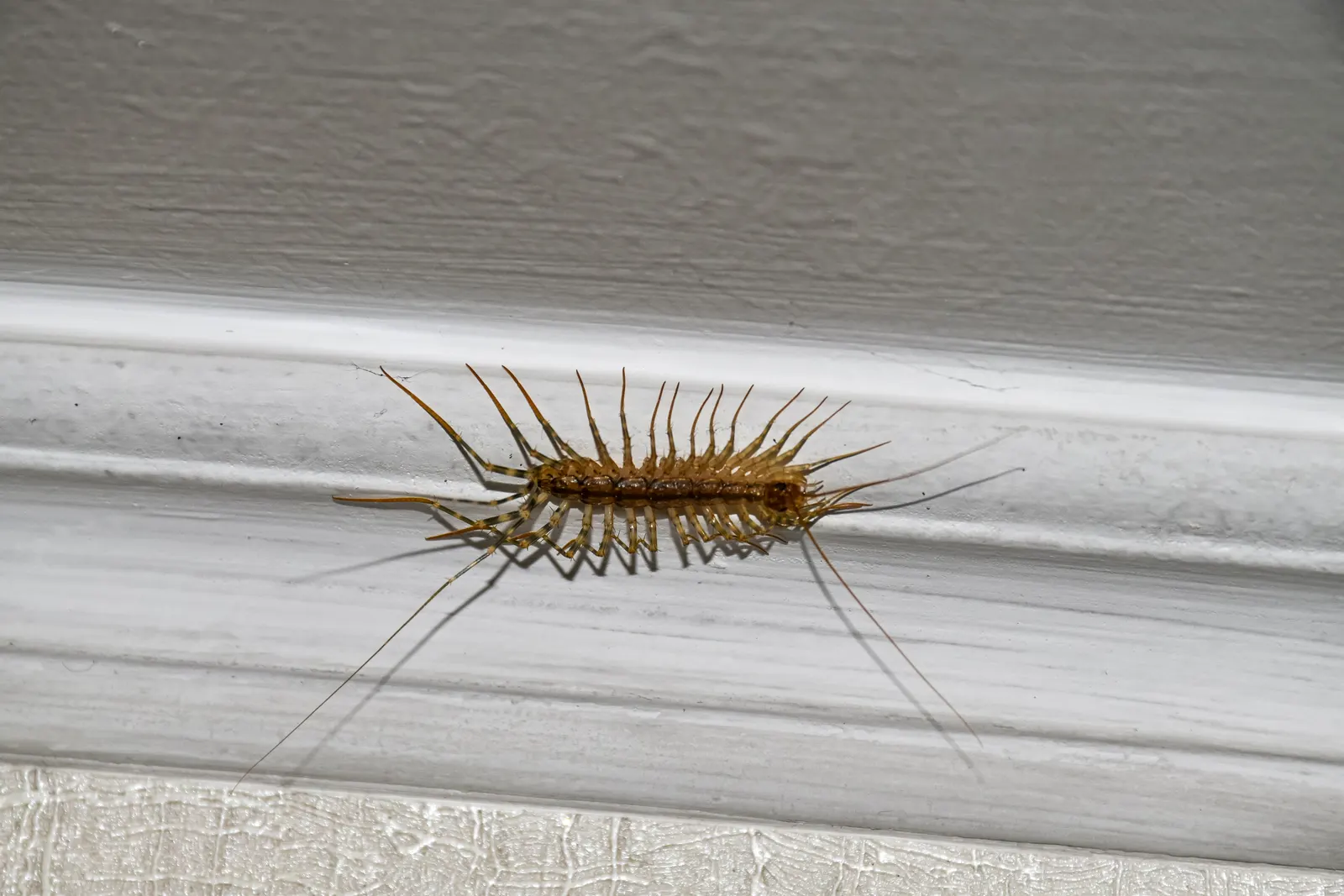
Every fall — or every drought, or every stretch of heavy rain — a familiar cast shows up indoors: house centipedes sprinting across the bathroom floor, earwigs under the door mat, springtails around the kitchen sink, weevils and beetles wandering the windowsills. Pest professionals group them as occasional invaders: species that live their whole lives outdoors until weather makes outdoors unlivable, then move into the nearest structure — often all at once.
Who’s in the group
The label covers the recurring cast across our markets: house centipedes (many-legged, alarmingly fast, and — believe it or not — predators that eat other pests), earwigs (the rear pincers look fierce but are harmless), springtails (tiny moisture-loving jumpers that arrive in crowds), weevils and Japanese beetles (plant feeders that wander in), and silverfish — which are common enough indoors that we give them their own article.
What unites them is the pattern, not the species: they don’t want to live with you. They’re refugees from soil that got too dry, too cold, or too wet.
Why you have them
Occasional invaders are a message about your home’s perimeter. They got in because the conditions right at the foundation suited them — mulch, leaf litter, dense ground cover, stacked wood, damp soil against the slab — and because a route existed: gaps under doors, torn screens, foundation cracks, unscreened vents, utility penetrations. Moisture is the through-line. Nearly every species in this group needs it, which is why they concentrate in basements, bathrooms, laundry rooms, and kitchens once inside.
The good news is the flip side of the pattern: most occasional invaders can’t actually sustain themselves in a dry, well-kept interior. Many die off on their own indoors. The nuisance is the arrival — dozens or hundreds at once — and the recurrence, season after season, if the conditions never change.
What actually works
Because the cause is conditions, the durable fix is conditions work — the same inspection-first logic as everything else in this library:
- Seal the routes. Door sweeps and thresholds, screen repairs, foundation cracks, vent screening, caulk around utility lines. This single category of work does more than any spraying.
- Dry the perimeter. Pull mulch and leaf litter back from the foundation, correct drainage and downspouts, fix exterior faucets — and run dehumidifiers in chronically damp basements, which removes what invaders come looking for.
- Reduce the harborage. Firewood off the ground, ground cover thinned near the slab, exterior clutter relocated.
- Perimeter treatment in season. A professionally applied exterior barrier, timed ahead of the seasonal push, intercepts the migration before it reaches the interior — this is what the quarterly cadence of a general pest plan is built around.
Occasional invaders are covered under our general pest program like everything else on this page: if they’re back between visits, so are we — same or next day, at no charge. If your version of this problem arrives every year on schedule, mention it when you book; the fix is making this the last season it happens.