
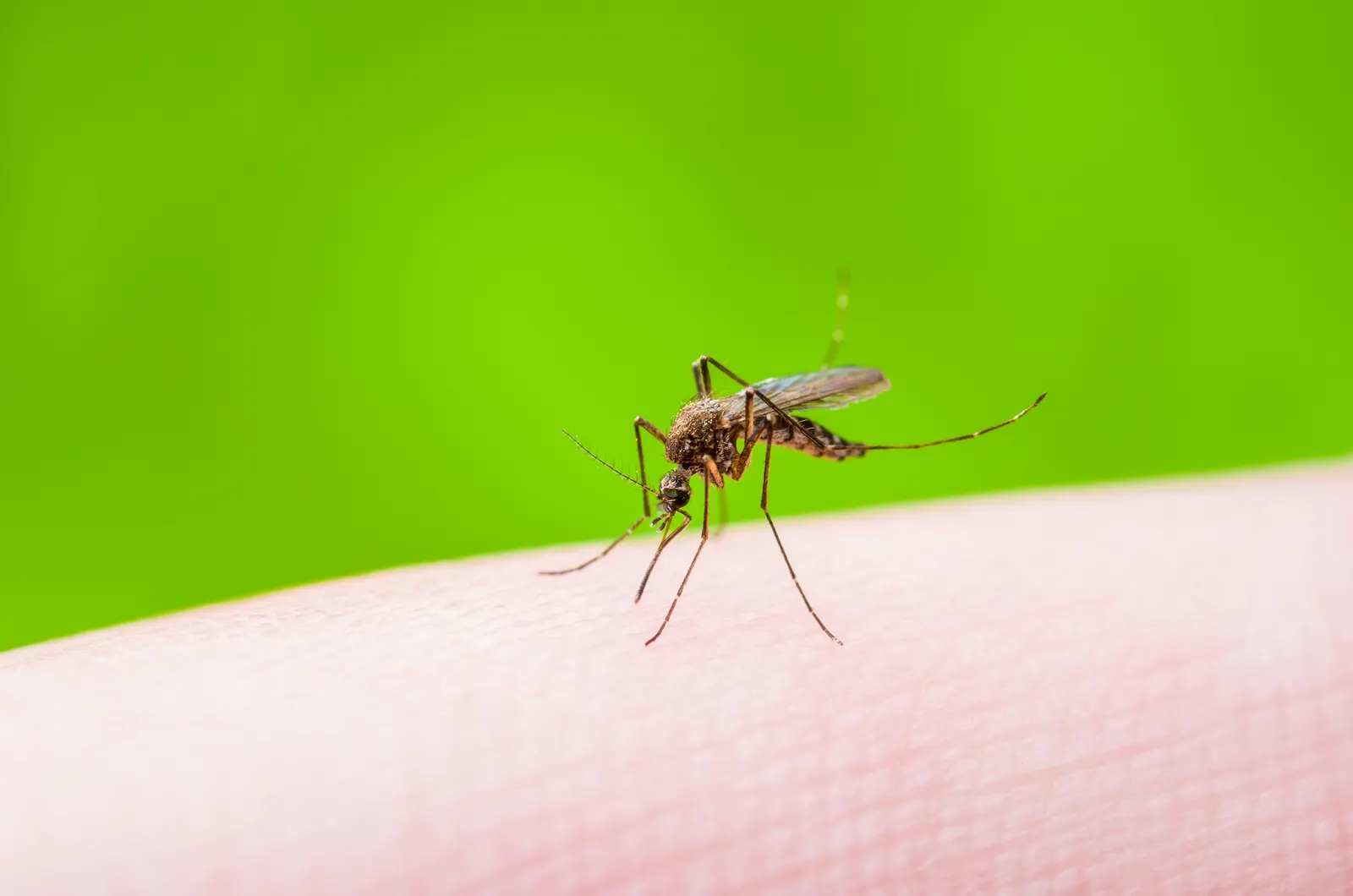
Two identical houses, one street: one backyard is unusable by June, the other is fine. The difference is almost never luck — it’s breeding habitat within a few hundred feet, most of it invisible until you know what to look for. Understanding two numbers explains nearly everything about mosquitoes: they can breed in a bottle cap of standing water, and the yard-dwelling species rarely travel more than a few hundred feet from where they hatched. The mosquitoes biting you were, in most cases, born on your property or your immediate neighbors’.
The species that matter to homeowners
Asian tiger mosquitoes — small, black with white stripes — are the backyard tyrant across most of the South and increasingly everywhere. They bite aggressively during the day, breed exclusively in small containers (saucers, gutters, toys, tarps, birdbaths), and stay close to home. If you’re bitten at a Saturday barbecue, this is usually the culprit.
Culex mosquitoes are the evening-and-night biters and the primary carriers of West Nile virus, the most significant mosquito-borne disease in the continental U.S. They favor stagnant, organically rich water: neglected pools, storm drains, clogged gutters, ditches.
Floodwater and salt-marsh species boom after storms and dominate coastal and river-bottom areas — strong fliers that can arrive from farther away, which is why marsh-adjacent homes carry a heavier baseline load.
Where they’re actually coming from
Walk your property after a rain and audit standing water. The greatest hits: clogged gutters (the number-one hidden source — water stands invisibly for weeks), plant-pot saucers, birdbaths (fine if flushed twice a week; a nursery if not), kids’ toys and playset tire swings, tarps and pool covers with pooled folds, trash-can lids, wheelbarrows, low spots that hold water for a week, corrugated downspout extensions, and the saucers under air-conditioner drains. Eggs to biting adults takes roughly a week in summer heat, so a source only needs to hold water seven days to produce.
The second half of the audit is resting habitat. Mosquitoes spend hot days sheltering on the undersides of leaves in dense, shaded vegetation: ivy beds, shrub interiors, tall grass, under decks. Yards with heavy shade and lush landscaping hold more mosquitoes — they have better daytime housing.
What works — and what’s theater
Source elimination is the highest-value work in mosquito control, and most of it is free: dump, drain, flush, unclog, regrade. Where water can’t be eliminated — rain barrels, ornamental ponds, French drains — larvicides (Bti dunks, available at any garden store, harmless to pets, fish, and pollinators) stop larvae from ever flying.
Professional barrier treatments, the core of our mosquito control service, treat the resting vegetation with materials that kill mosquitoes landing there over the following weeks — combined with a technician’s trained-eye source audit each visit. This is the difference-maker for heavily shaded yards and for the tiger mosquito, which repellent-only strategies barely dent.
Personal protection still matters at dusk and in season: EPA-registered repellents — DEET, picaridin, or oil of lemon eucalyptus — actually work; wristbands, patches, and phone apps don’t. And the humble box fan on the patio is genuinely effective: mosquitoes are weak fliers, and moving air both blocks their approach and disperses the carbon-dioxide plume they track you by.
Theater: zappers (they kill the wrong insects by the thousand), ultrasonic devices (fail every controlled test), citronella candles (marginal at best), and “mosquito plants” (the intact plant emits almost nothing).
The honest expectation
No treatment produces zero mosquitoes — they fly in from beyond any property line, and anyone promising elimination is selling. What a well-run program delivers is a dramatic, sustained knockdown: evenings outside that are comfortable instead of a retreat. That’s the standard worth paying for, and the one we hold ourselves to.
If your yard is losing its summer, start with the water audit this weekend — then let us handle the resting sites and the season-long schedule.