
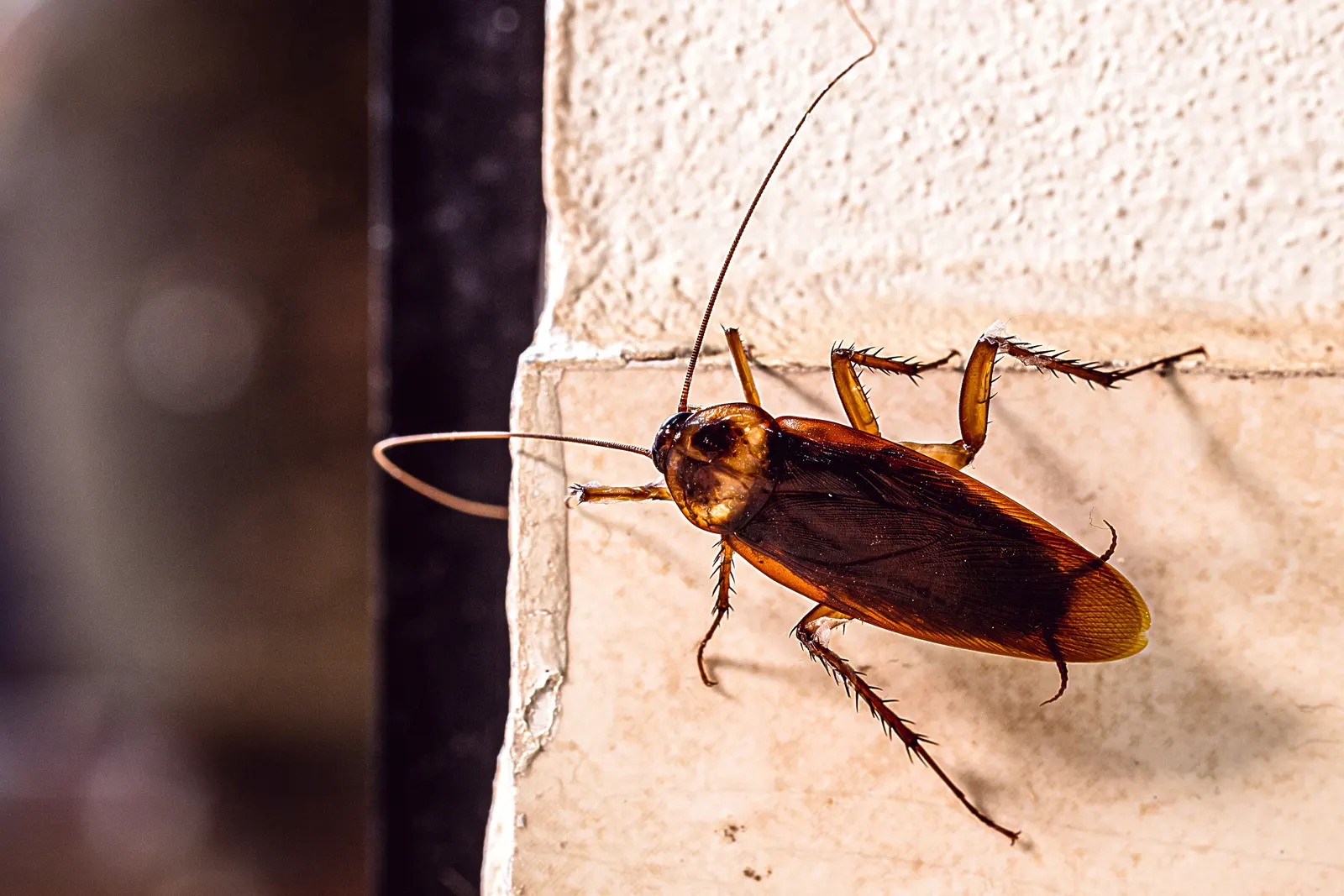
“Cockroach” is one word doing the work of two very different problems. The large reddish-brown roach that ambles across the patio on a summer night and the small tan roaches multiplying behind your refrigerator are different species, living different lives, requiring different responses. Getting the identification right is most of the battle.
The American cockroach — the outdoor invader
American cockroaches are the big ones — 1.5 to 2 inches, reddish-brown, with a pale figure-eight pattern behind the head. Depending on your region you may know them as palmetto bugs or waterbugs. They live primarily outside the living space: sewers, storm drains, mulch beds, leaf litter, woodpiles, crawl spaces, and the damp voids around plumbing. They wander indoors through gaps, door thresholds, and — memorably — floor drains and plumbing chases, with traffic spiking during hot, dry spells and after heavy rain flushes their harborages.
An American roach indoors is usually a trespasser, not a resident. Professional treatment focuses on the exterior perimeter and moist harborages near the house. Homeowners can also address access routes such as worn door sweeps, unscreened vents, and gaps around pipes.
The German cockroach — the indoor breeder
German cockroaches are small — about half an inch, tan, with two dark parallel stripes behind the head. They cannot thrive outdoors in most climates; they are an indoor species that lives where food, water, and warmth converge: kitchens and bathrooms, behind refrigerators, under sinks, inside the warm motor housings of appliances, in cabinet hinges and drawer slides.
Their reproductive math is the emergency. A female carries an egg case with 30–40 eggs, and offspring can reproduce within weeks. A handful of hitchhikers — arriving in a cardboard box, a secondhand microwave, a grocery bag, or through a shared wall — becomes hundreds in a season. German roach problems never wait themselves out.
Why the health stakes are real
Cockroach droppings, shed skins, and saliva are among the most potent indoor allergens known, with a well-documented link to asthma — especially in children. Roaches also commute between drains, garbage, and food-prep surfaces, mechanically transferring bacteria as they go. Eliminating an infestation is a measurable indoor-health improvement, not just a comfort upgrade.
Why foggers fail — and what works
“Bug bombs” are the classic wrong answer. The mist doesn’t penetrate the cracks and voids where roaches actually live, and its repellent quality scatters survivors deeper into walls and adjacent rooms — spreading the infestation and contaminating surfaces so that professional baits placed later get avoided.
What works, particularly for German roaches, is the professional protocol: gel baits placed precisely in the harborage map (not smeared everywhere — placement is the skill), insect growth regulators that prevent nymphs from maturing and reproducing, vacuuming of heavy congregations, sticky-trap monitoring to measure the population’s collapse, and a follow-up visit to catch the hatch from egg cases that survived — because egg cases resist nearly everything. Our cockroach control service is built on exactly this sequence.
Prevention worth doing
- Starve the competition. Bait works when it’s the best food in the room. Clean under and behind appliances, wipe grease, store food and keep pet food sealed, empty the sink at night.
- Dry it up. Fix drips, don’t leave standing water in sinks or saucers overnight — roaches need water more urgently than food.
- Inspect what enters. Cardboard boxes, grocery bags, and secondhand appliances are the German roach’s ride. Check them, and don’t store cardboard long-term in kitchens or garages.
- Close the doors. Door sweeps, sealed pipe penetrations, screened drains and crawl-space vents — this is what keeps American roaches outside where they belong.
- Declutter. Every undisturbed pile is a harborage. Especially cardboard, which roaches both hide in and eat.
When to call a professional
Immediately, for German cockroaches — the reproduction rate punishes delay, and the DIY spray-and-fog cycle actively makes professional elimination harder. For American roaches, call when sightings become regular rather than rare, or when they’re appearing from drains. In both cases a professional will identify the species, map the harborages or entry points, and treat accordingly — then verify the result with follow-up, which is the difference between “we haven’t seen one lately” and “it’s over.”