
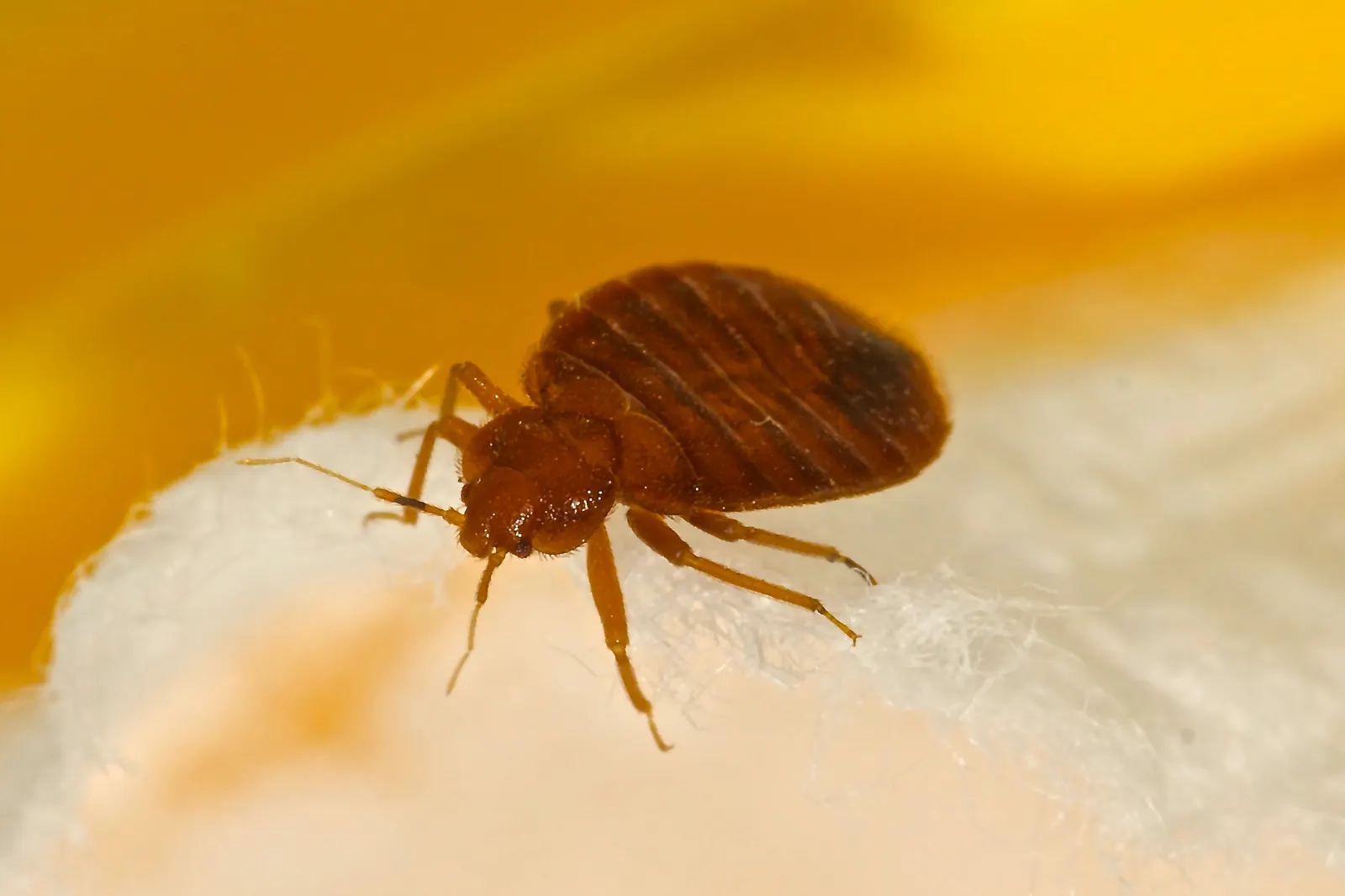
No pest generates more anxiety per ounce than the bed bug — and anxiety produces exactly the wrong responses: embarrassment, delay, fogger-buying, and furniture-tossing. Here’s the calm version: bed bugs are a solvable problem with a well-established professional protocol, they say nothing about your housekeeping, and the single most valuable thing you control is how quickly you confirm and act.
What you’re looking for
Adult bed bugs are real, visible insects — apple-seed sized (about 5mm), flat, oval, and reddish-brown (redder and rounder just after feeding). Nymphs are smaller and translucent-to-tan; eggs are about a millimeter, white, and glued in place. They cannot fly or jump — they walk, and they hide within a few feet of where people sleep, emerging (mostly at night) to feed.
Bites are not confirmation. Reactions vary wildly — some people welt dramatically, roughly a third of people don’t react at all, and flea bites, mosquito bites, and dermatitis all imitate them. Confirmation is physical evidence:
- Fecal spotting — the most common find: clusters of small rust-to-black dots, like felt-tip pen marks, on mattress seams, box-spring fabric, sheets, and bed-frame joints.
- Live bugs and shed skins in mattress piping, under box-spring dust covers, in frame corners and screw holes, behind the headboard.
- Eggs and cast skins in the same crevices.
- Blood smears on sheets from crushed, fed bugs.
To inspect: strip the bed, run the mattress piping seam by seam under a flashlight, flip the box spring and peel back the dust cover, and check the headboard’s wall side — headboards mounted to walls are a top harborage. In established cases, check nightstands, upholstered chairs, baseboard gaps, and outlet plates near the bed.
Why bed bugs beat DIY
Three biological facts stack the deck. Eggs resist almost everything — sprays that kill adults leave the next generation intact, which is why one-shot treatments fail. They hide in cracks treatment mist never reaches — foggers are worse than useless, scattering bugs into walls and adjacent rooms and spreading the infestation. Retail pyrethroid resistance is widespread — the sprays available to consumers are the exact chemistry many bed bug populations have evolved past.
Meanwhile the clock runs: a fed female lays one to five eggs a day, and an unnoticed introduction becomes a room-wide infestation in a couple of months.
What actually works
Professional protocols — ours is described on the bed bug treatment page — combine careful whole-room inspection, treatment layers matched to the situation (targeted insecticides with modern chemistry, steam or heat where appropriate, mattress and box-spring encasements that trap survivors and simplify future inspection), and scheduled follow-up visits timed to the egg-hatch window. That follow-up isn’t an upsell; it’s the mechanism that catches hatchlings before they re-establish, and no honest bed bug job omits it.
Your part is containment while it happens: launder and hot-dry bedding (the dryer’s high heat is lethal at every life stage), bag what’s laundered, resist relocating to the guest room or couch — sleeping elsewhere teaches the bugs to follow you and seeds new rooms — and don’t move furniture between rooms.
Prevention for travelers and bargain hunters
- In hotel rooms: luggage on the rack or hard floor, never the bed; give the mattress piping and headboard a one-minute flashlight check before settling in.
- Coming home: unpack over a hard floor; hot-dry the clothes; inspect the suitcase seams. After high-risk trips, store luggage away from bedrooms.
- Secondhand finds: free curbside upholstered furniture and mattresses are the classic vector. Inspect used furniture seam by seam before it crosses your threshold — or skip upholstered secondhand entirely.
- Apartments: report sightings early; bed bugs travel between units, and treating one unit as an island is how buildings stay infested.
The bottom line
Confirm with evidence, not bites. Skip the foggers entirely. Keep the mattress. And compress the timeline between “I think we have bed bugs” and a professional inspection to days, not weeks — speed is the one variable entirely in your hands, and it’s the one that most determines how big this job gets.